
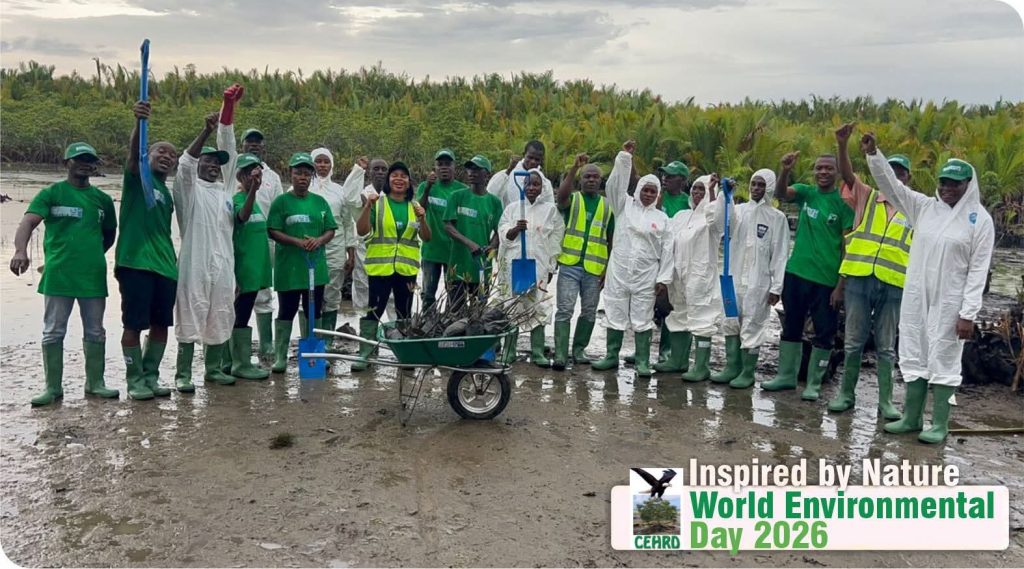
As the world commemorates World Environment Day 2026, the Centre for Environment, Human Rights and Development (CEHRD) joins the global call for urgent climate action through nature-based solutions.
Climate change impact are becoming increasingly evident through changing rainfall patterns, rising temperatures, heat waves, and droughts. These changes threaten ecosystems, livelihoods, and the wellbeing of communities.
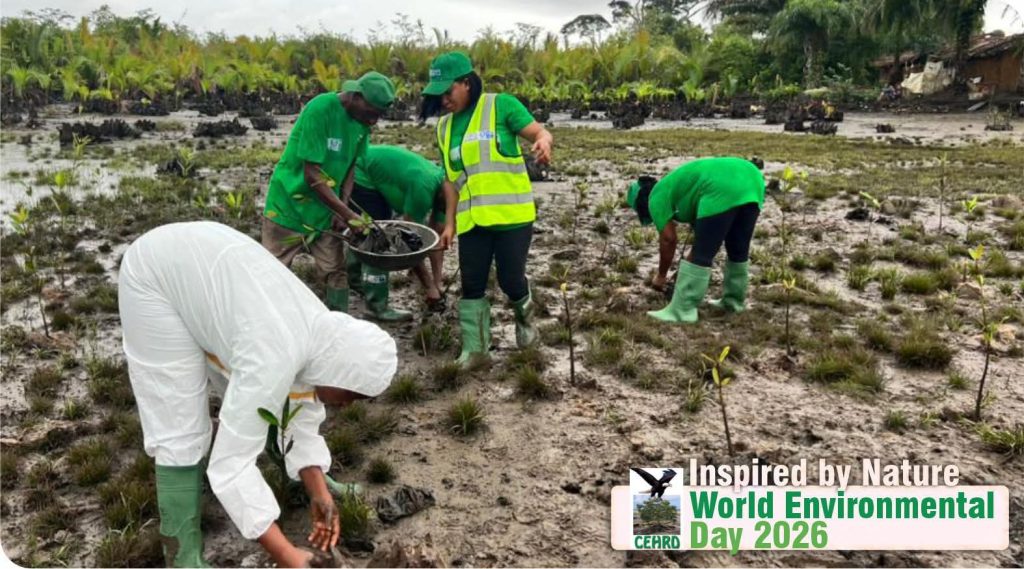
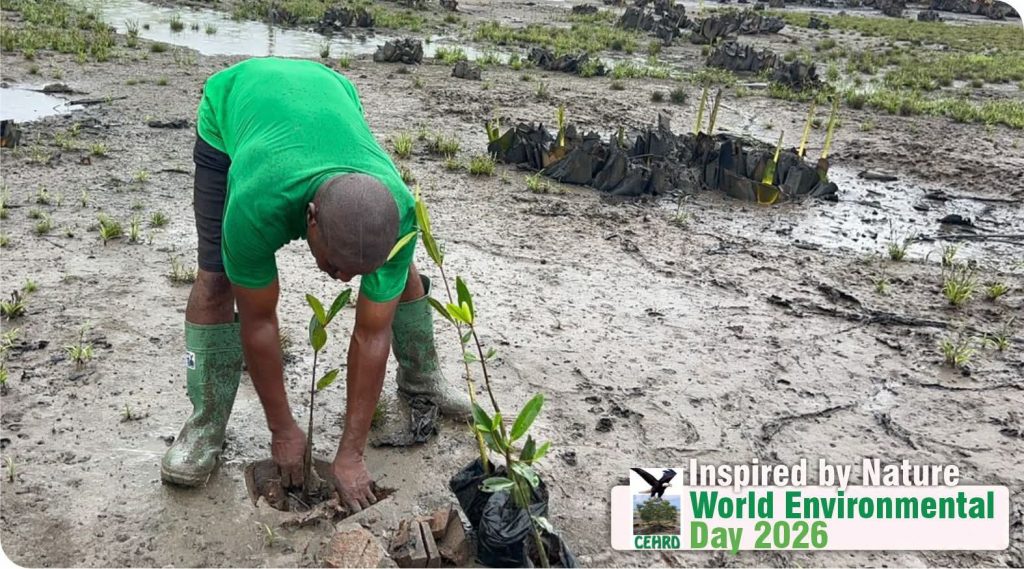
At CEHRD, we recognise that nature is one of our greatest allies in addressing the climate crisis. Through our mangrove restoration initiatives, we have worked with coastal communities to restore degraded ecosystems and promote awareness of the important role mangroves play in carbon sequestration, climate resilience, and sustainable livelihoods.
Yet, one of the greatest barriers to effective climate action remains our growing disconnect from nature. Across communities and cities, trees are felled without replacement, green spaces are disappearing, and development often occurs with little consideration for ecological sustainability.
CEHRD therefore calls on governments at all levels, urban planners, developers, businesses, and citizens to embrace a model of sustainable development that works with nature rather than against it. We envision cities and communities where green spaces are protected and expanded, where trees are integrated into urban landscapes, where horticulture and ecological design are incorporated into buildings and infrastructure, and where development decisions recognise the value of healthy ecosystems.
On this World Environment Day, CEHRD reaffirms its commitment to advancing environmental sustainability, ecosystem restoration, and community-driven climate action for a more resilient future.
Nature is not separate from our future, it is the #foundation of it.
#CEHRD